
The 5 Sentence Patterns You Need to Know in English
Table of Contents
English Sentence Structure
In English, a grammatical sentence (i.e., independent clause and full sentence) typically includes a subject and a verb, and often an object or complement.


This basic structure helps us recognize whether a sentence is natural and makes sense. When a sentence is ungrammatical, it not only feels awkward but also fails to convey the intended meaning clearly. That’s why a concrete understanding of sentence structure is so important, and why it’s a common focus on assessment tests like the SAT, ACT, and GRE.
Only Five Sentence Structures in English
Luckily, there are only five basic sentence structures in English, so learning them all isn’t as tough as it sounds. Before we go over each sentence structure, let me first list all the sentence patterns.
- Subject-Verb (SV)
- Subject-Verb-Complement (SVC)
- Subject-Verb-Object (SVO)
- Subject-Verb-Object-Object (SVOO)
- Subject-Verb-Object-Complement (SVOC)
Unless you’re using special grammatical constructions, almost every sentence in English follows one of these five patterns.
Subject–Verb (SV) Construction
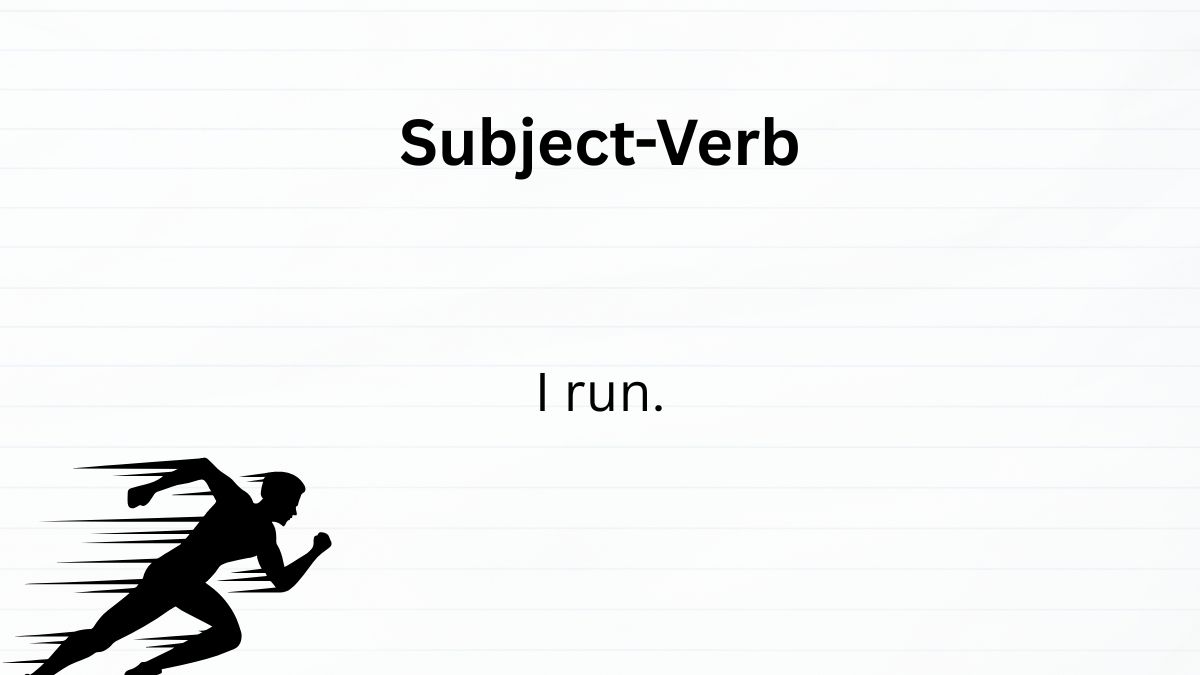
This structure is made up of just two parts: a subject and an intransitive verb.
The dog runs furiously in the park.
Let’s break it down:
- Subject: The dog
- Verb (Intransitive): runs (furiously in the park)
The phrase “furiously in the park” adds detail, but it doesn’t change the core structure, which is “The dog runs.” “Furiously” is an adverb that describes how the dog runs, and “in the park” is a prepositional phrase that tells us where. Although the sentence ends with “the park,” that doesn’t make it an object. It’s part of a prepositional phrase, and unless a noun or noun phrase comes directly after the verb without a preposition, it isn’t a direct object.
Also, intransitive verbs are verbs that don’t take a direct object. In other words, there’s no receiver of the action. For example, a verb “rise” is intransitive, meaning that you can’t say “I rise my hand.” Since the verb “rise” is intransitive, it can’t be directly followed by an object (my hand).
Subject–Verb-Complement (SVC) Construction

This construction has three components: a subject, a verb, and a complement. The complement gives more information about the subject, and it can be either a noun or an adjective.
My teacher is a good person.
- Subject: My teacher
- Verb: is
- Complement (noun): a good person
Here, the complement “a good person” tells us what the teacher is. It describes the subject (my teacher = a good person). Whenever the subject and the complement refer to the same thing, the sentence usually follows the SVC structure.
Here’s another example.
The professor became angry.
- Subject: The professor
- Verb: became
- Complement (adjective): angry
In this case, “angry” describes the professor’s state. It’s an adjective complement linked to the subject.
Subject–Verb-Object (SVO) Construction
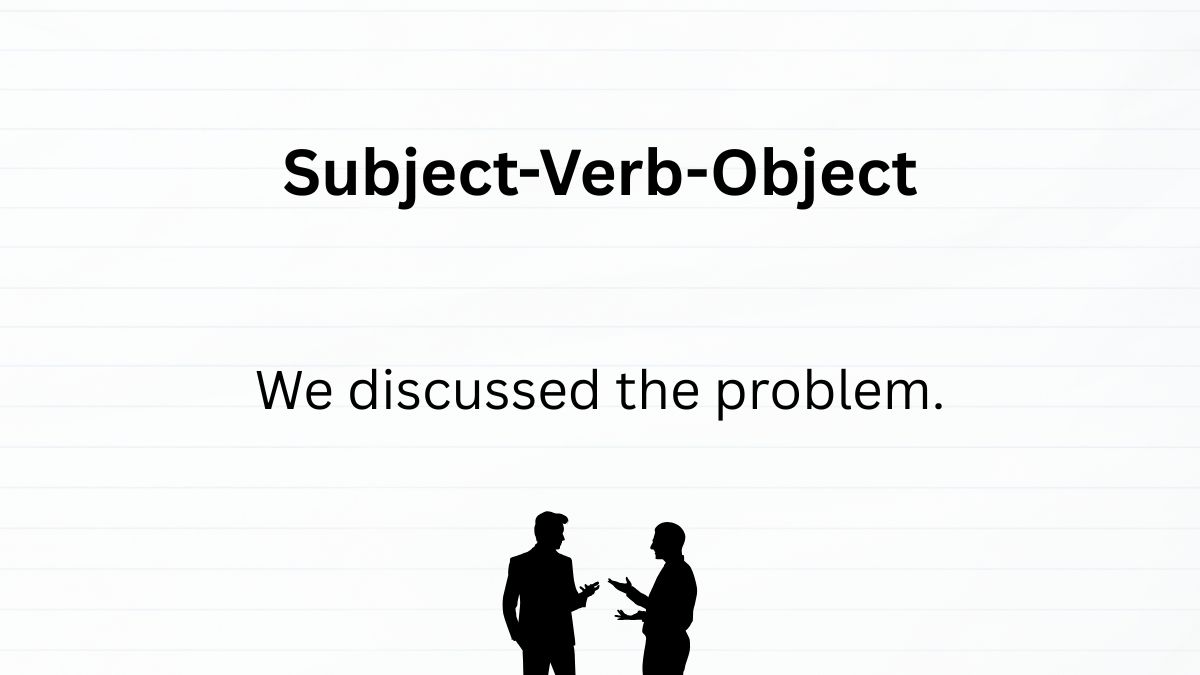
This sentence structure includes three parts: a subject, a transitive verb, and an object.
Unlike SV constructions, SVO sentences require a transitive verb, a verb that takes a direct object (something that receives the action).
I hugged my cat.
- Subject: I
- Verb (Transitive): hug
- Object: my cat.
As the name suggests, SVO constructions place the object directly after the verb. Transitive verbs always need an object to complete their meaning. That’s what sets them apart from intransitive verbs, which do not take an object.
For example, the transitive verb “raise” can’t be used like this: “The sun raises.” This sentence is incomplete because it leaves us wondering: raises what? Instead, you need to include a direct object: “The sun raises crops.”
Distinction Between SVO and SVC
The key difference between SVO and SVC is that verbs in SVO sentences usually express an action you can picture, while verbs in SVC sentences do not.
For example, it’s easy to imagine the action connected to the verb “run.” But with the verb “is,” there’s no action to picture. It simply links the subject to more information.
Subject–Verb-Object-Object (SVOO) Construction
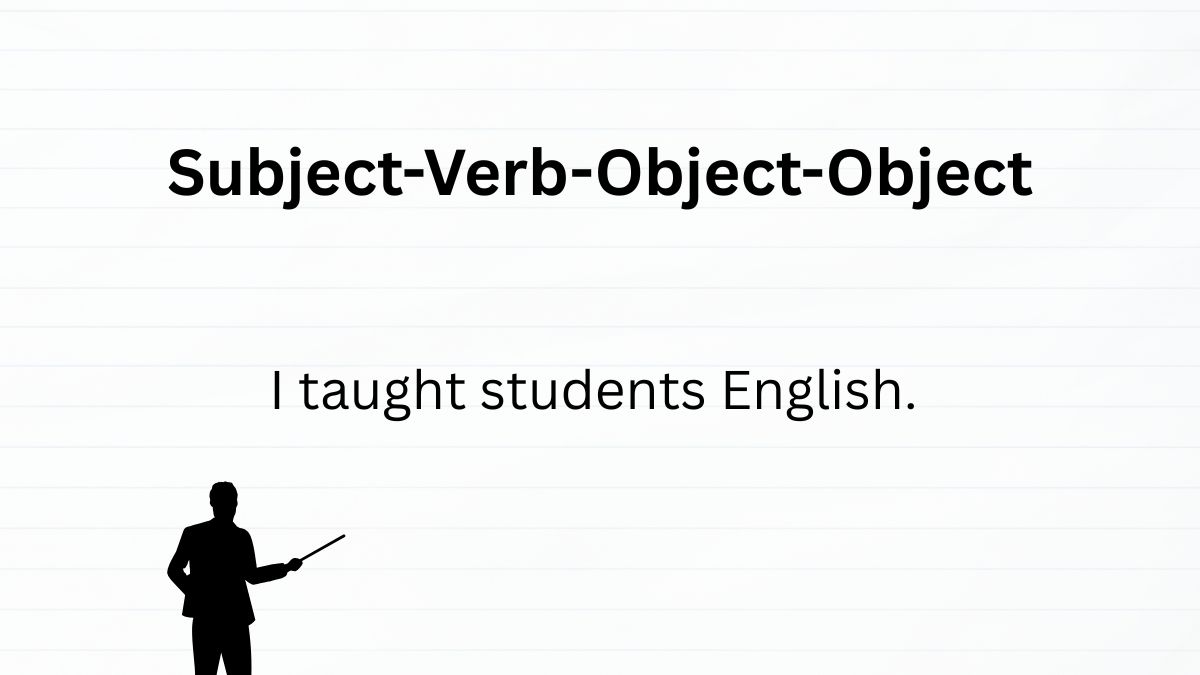
This sentence structure consists of a subject, a verb, an indirect object, and a direct object. One notable feature of the construction is that you must place two objects consecutively.
My father gave me his watch which he bought 12 years ago.
- Subject: My father
- Verb: gave
- Indirect object: me
- Direct object: his watch (which he bought 12 years ago)
In this sentence, “me” is the person receiving something (indirect object), and “his watch” is the thing being given (direct object). Because both objects follow the verb without a preposition, this sentence follows the SVOO construction.
Subject–Verb-Object-Complement (SVOC) Construction
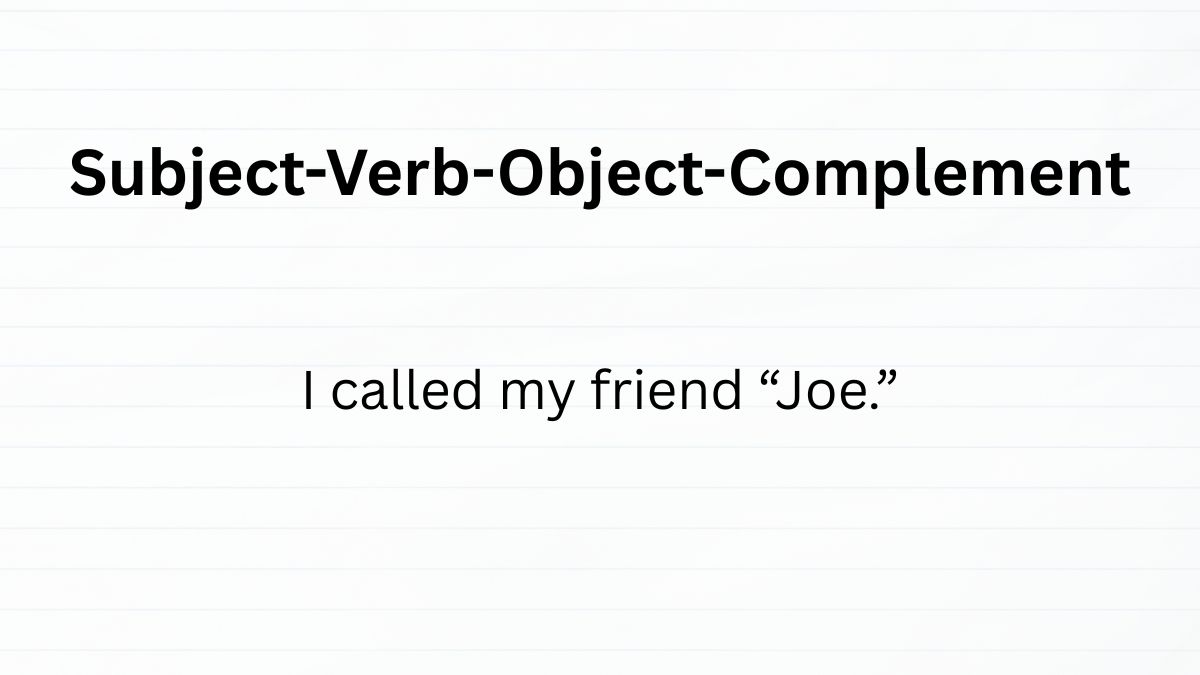
This somewhat rare sentence structure includes a subject, a verb, an object, and a complement. A sentence is typically categorized as SVOC when the object and the complement refer to the same person or thing.
I named my dog Bobo.
- Subject: I
- Verb: named
- Object: my dog
- Complement: Bobo
Here, the object “my dog” and the complement “Bobo” refer to the same thing. They’re both talking about the dog. In SVOC constructions, the complement provides more information about the object.
About the Author: joe